
Trusting the Unknown: What I've learned from Turtles and Airplanes and Crosswalks in Ireland

How do you trust the unknown?
Last year, I traveled alone to the Seychelles, to live on an island smaller than a square mile for a month. I went there to volunteer with tortoises and sea turtles.
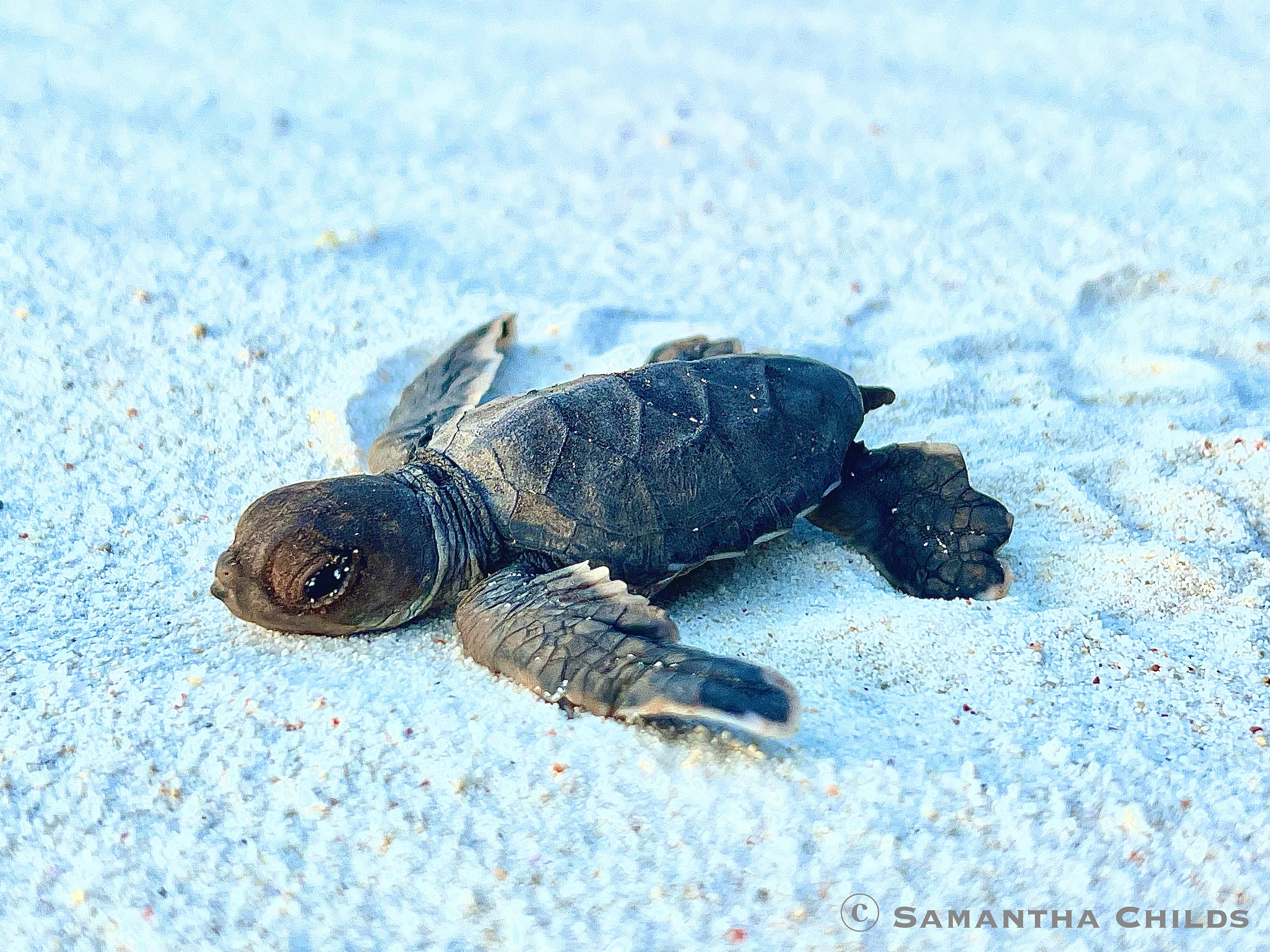
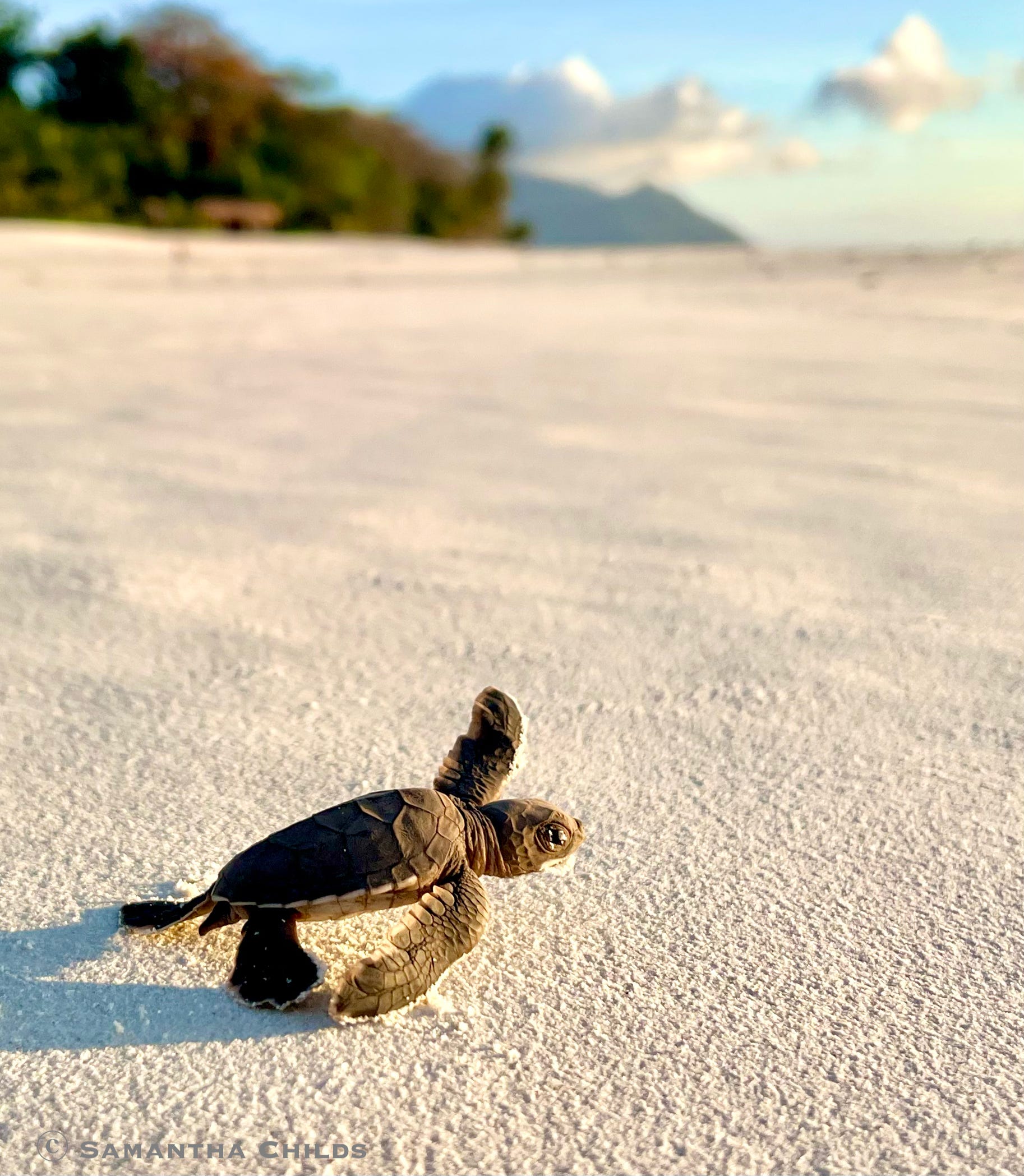
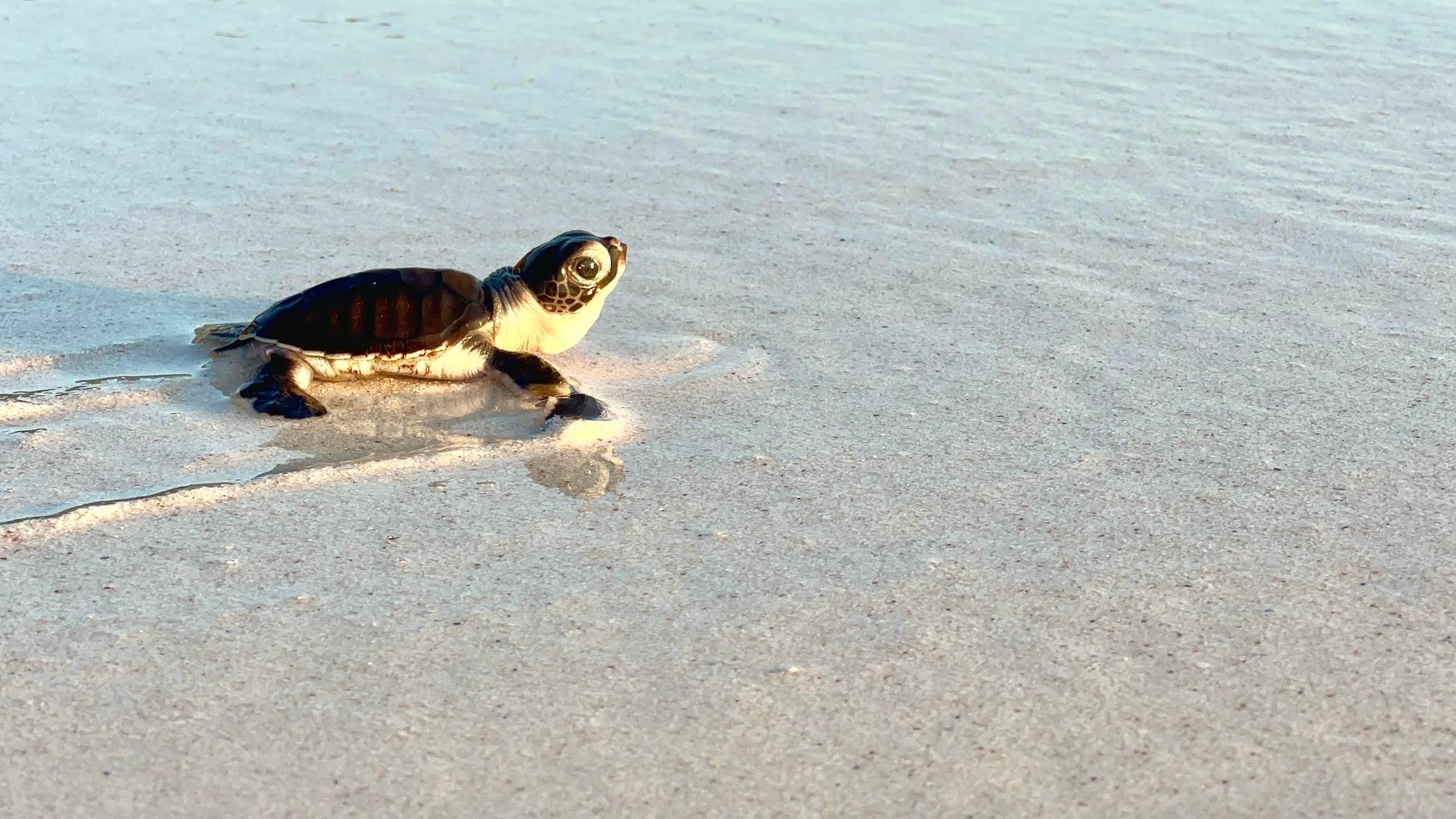
During that month I spent my sunsets guarding green sea turtle hatchlings as they took their very first steps in life. Tiny, clumsy, heart-breakingly-vulnerable steps. They were following the warm glow of the sun. These turtles were just newborns, their eyes seeing light for the very first time, and yet nature was already forcing them to venture out — on their own — across the wide white sand beach and into the waves and vast ocean.
Sometimes I felt a muffled screaming from within my abdomen of, “This isn’t fair! They’ve never swam before! They’ve never walked before - they haven’t done anything! They’ve never even eaten before!” I’d feel the urge to scoop each one up, protectively, like an abandoned puppy, and take them home and feed them and protect them and make sure they would never be hurt. One in a thousand green sea turtles makes it to adulthood. One in a thousand.
But I didn’t.
And I was in love with every single one of them. Every single one.
Instead I stood beside them in complete awe, tears flowing down my cheeks. A 45 year-old human. Watching a newborn do something more courageous than anything she’d ever dreamt of.
I’d watch them as they took their first steps forward, awkwardly pushing their baby bodies, some with bellies not yet finished absorbing the yolk from their egg, their newly formed little flippers pattering against the sand, their tiny faces knocked with it, white sand grains rimming the edges of their beautiful big eyes.
I’d watch them as they made it across the beach, and water touched them for the very first time. Wondering if it is what they thought water would feel like. Beside them, I’d feel the same wave on my feet and legs, loving that we were being touched by the same thing, at the same time.
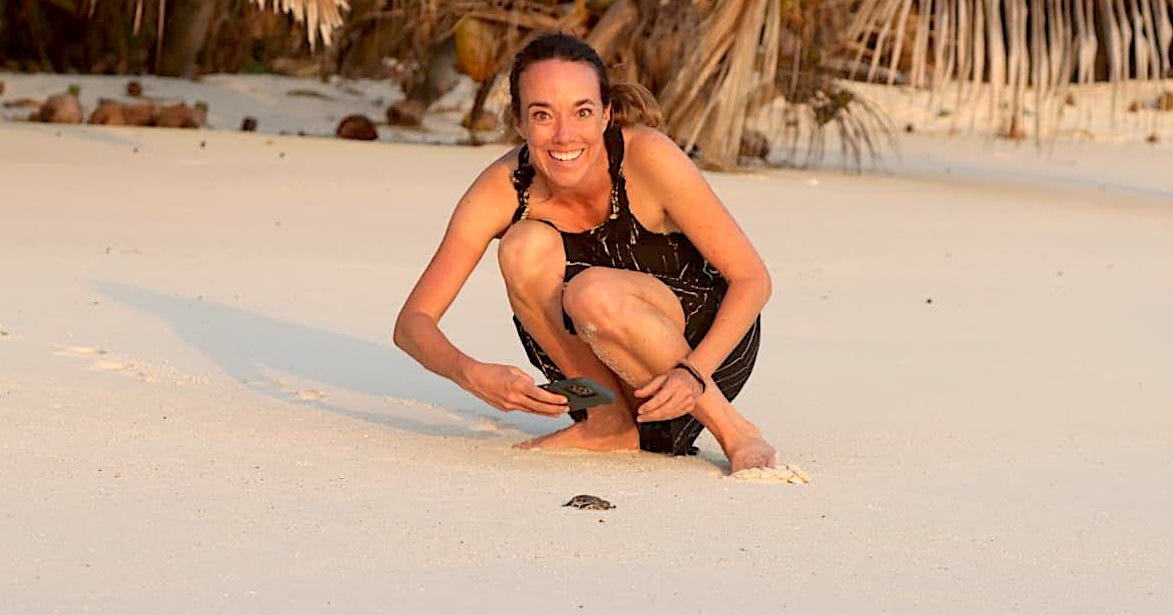
Sunset after sunset, I’d walk beside these turtles, guarding against crabs who’d run to grab them and take them into their holes, smoothing the sand before them of footprints, and whispering to them, “You can do it. Keep going. Keep going!” I’d snap pictures of them and film them and wonder if that would be the only photo ever taken of that little soul. If they’d live through the night. I’d think about if my brief moments with them were their only moments they’d feel love and attention. If my love for them would be the one love they felt in their short life.
Some babies were fast and raced ahead of the others. Some were so slow from the beginning, and already tired, and yet they had such a long journey ahead of them. Some of the turtles were born deformed, and yet still they moved forward. I watched one, dragging a tiny non-working leg behind him across the sand. “Will he be ok?” I pleaded with Ange, the island’s turtle expert. He told me he’d seen adults come to lay with injured flippers. So he could make it. I beamed love out of my heart at that baby, like a Care Bear, hoping it would help. Others had been in nests that had been attacked by crabs, and so they started the world disadvantaged, and yet these babies too moved forward, with bits and pieces of themselves damaged. I saw one who mostly went in circles, his brain must have been affected by the crab attack. We called over Ange and he helped him. Another had lost an eye. At first I thought it was only covered in sand, but there was nothing there. And he was still heading out into the world. Slowly. But going forward. I cried a lot for him, feeling so much pain that it almost felt personal. Like I had caused his half-blindness. Or that I was the one-eyed turtle myself. I couldn’t feel the difference between that baby and me anymore. Or any of us. I cried for all of us, going out in this world half-blind. There is so much unknown and yet we still go. I walked with that baby turtle, all the way to the water.
At one hatching, a baby died right at the start. It was alive in the nest, yet died before it ever got to the beach-walk part of life. It didn’t even get to feel what water felt like. I wondered what it had felt in those moments it had lived. If it could have been loved more. If that would have helped. I carried it in my gloved hand to the water’s edge and took a blurry photo of its tiny face, eyes still open, and its tiny body within my rubbered fingers. And then I let it go. We wore gloves to protect them. But they were in a world of crabs and sharks and huge fish and birds and crashing waves and rocks. Life didn’t wear gloves.
Then I turned and saw all the other turtles that I was missing. Doing their first steps, something that would happen only once in their life, ever. All the beauty happening all around me. The constant, heartbreaking beauty of being alive in this world. Everything during those sunsets felt so intense and love-filled and painful and precious and poignant.
Almost every night, tears flowed down my cheeks, my heart humbled and aching with the overwhelm of getting to be a part of something so miraculous. I’d laugh, I’d squeal, I’d cry, and I’d look wide-eyed and cartoonishly delighted in photos, like a child on Christmas morning. I’d look at the baby turtles and think about all the silly things I worry about and how what they were doing was scarier and more vulnerable and braver than anything I was facing in my life. What incredible little beings.
Then I’d fall asleep at night, exhausted from my day, while those little babies were out there, in the huge dark ocean at that exact same moment.
At the start of the year, I didn’t have a view of the Seychelles in my future.
It was January, and I was living in my hometown in Southern California and feeling… stuck. I felt like I was waiting for something to change, but all that was happening was I was walking in circles, like the turtle whose brain had been hurt when the nest had been attacked. And I was quite literally going in circles: every day I’d stretch my double-bowed laces around the hooks of my hiking boots and leave home to walk the beaches, neighborhoods, and lagoon and then back, my feet and mind pacing the same tracks and getting nowhere.
So I booked a one-way flight to Ireland. A country where nothing was familiar, but where I hoped I’d feel less lost. In the LAX airport, outside my gate, I wrote the first lines in my new journal, which was blue and covered in pink hummingbirds and flowers:
January 19, 2025
I already feel lighter. Freer. Like I am entering the life I am supposed to live. Like I am a part of life. Flowing with it. Not a rock, stuck against the side of a waterway, stagnant and pounded and unmoving. I am floating.
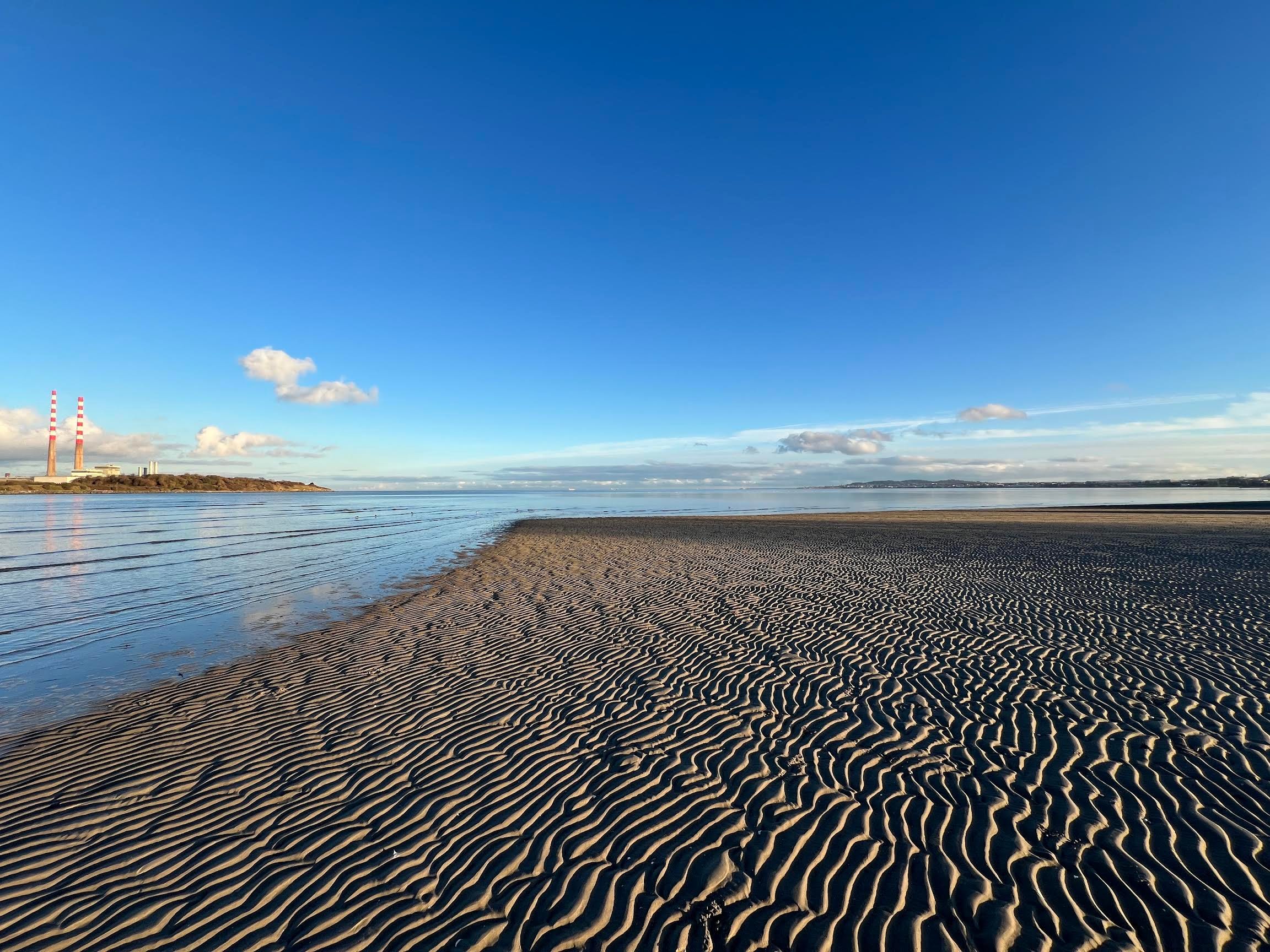
I didn’t know what I was doing or what would happen, but I was going. And that felt like light. Like following the sun. My first full day in Dublin, I walked to the ocean and cried. I had made it somewhere and it was beautiful — a huge stretch of ripple-printed sand and then water and blue sky. I took a picture of my hiking boots against the ripples. I took art, writing, and photography classes. I cried. (A lot.) I laughed. I bought a Leap Card. I felt confused and alive and hopeful and scared. I went into pubs alone and sat myself down at the bar and made friends with strangers. I joined a pub quiz team. I bought a blender. I became Instagram friends with the man in the blender shop. I saw daffodils peeking their yellow heads up out of the dark soil, like promises of sunshine.
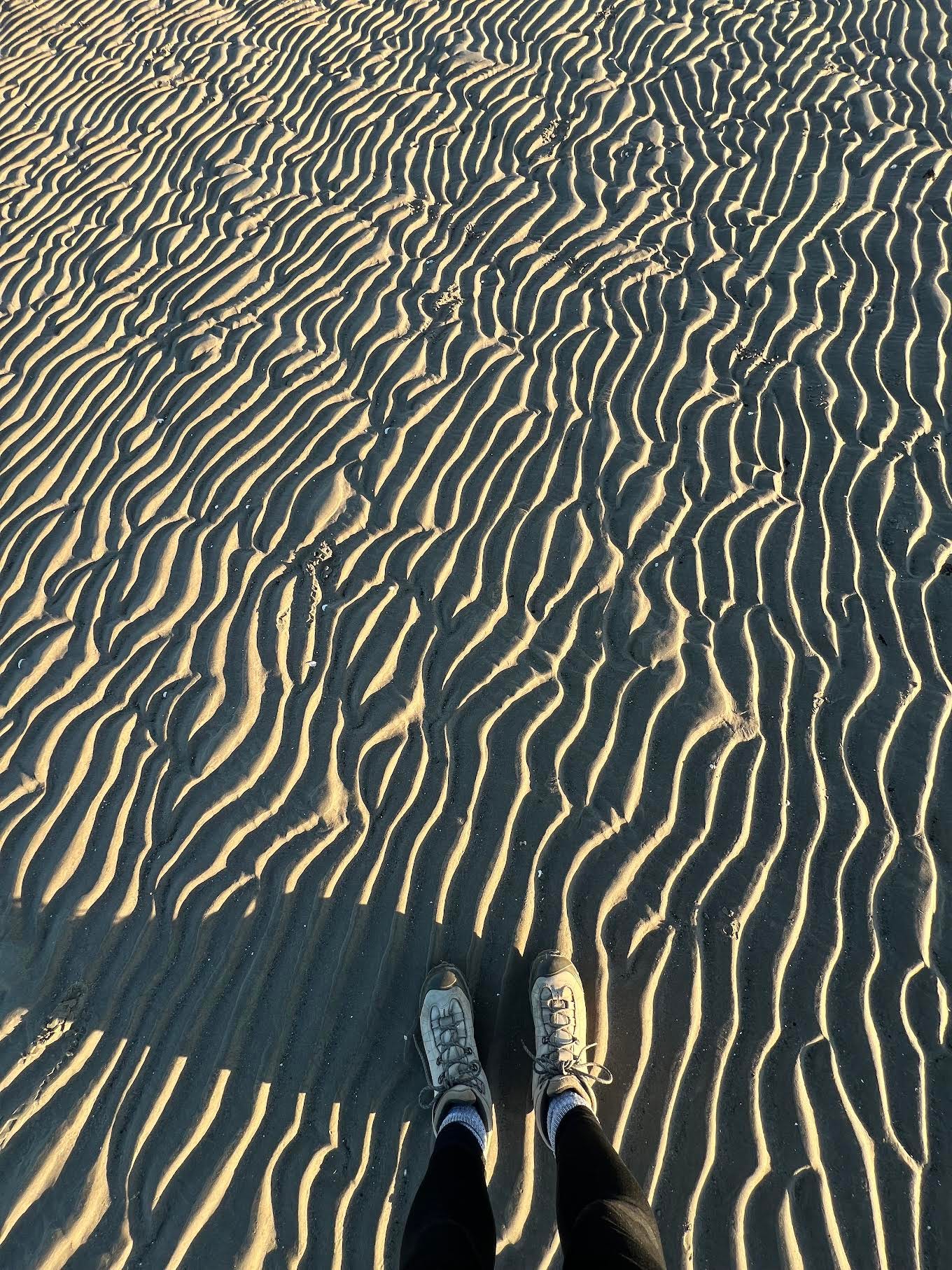
Three months later, the weekend of my birthday, I had to leave. I needed a longer stay visa, and to be somewhere else in the meantime. A few days before my time was up, a man standing beside me on a road island began talking to me while we waited for the crosswalk light to change. He told me he was originally from Northern Ireland and he recommended that I go to a small city called Warrenpoint. We walked down the sidewalk together and I looked at the man’s baseball cap. It had a yellow flower on it, and the word “Courage.” I booked an Airbnb with zero reviews but a picture of a living room window overlooking the water of Carlingford Lough. Two days later, I was on a train, off to Warrenpoint. I pushed a chair and table next to that window to write. I lived there three months.
It was in Warrenpoint where I decided my next adventure would be the Seychelles. I wanted to be around animals and sunshine and I researched places to volunteer in Africa and did a video application for the position from my seat by that window.
And then I was off to Africa.
I wonder, how are we so different than the sea turtles?
Each morning when we wake up, we don’t know what the day will bring. We don’t know what the future holds. Whether we are traveling or at home. We don’t know. And yet we go. Each day we climb out of bed and we go.
I think what I am most afraid of, is how shit I am to myself when things go wrong. How I beat myself up. How I tell myself I should have done something differently and that I caused whatever happened to me. It makes me afraid to enjoy the moment. It makes me afraid to be happy. Because I am so scared of how mean I am going to be to myself if things go wrong.
I watched a video once of a blind French bulldog running around in his backyard, his face full of innocent bliss. And then he ran straight into a tree. And I bawled. Bawled for him. Bawled for me. For those parts of me that have felt so happy in life and then been hit so hard and felt like that hit came because I had dared to let myself be so happy. I don’t even know if that’s exactly it. But there is a fear there. A fear of thinking that I am ok. Of thinking that the world loves me, and, after something happens, then feeling like I was wrong or that I should be punished for having thought that. Maybe that’s it. Because that is making me cry now. I am afraid that if I’m not afraid, I’m going to get hurt.
But I am going to get hurt. We are all going to get hurt. There is a zero out of a thousand chance that we are going to make it out of this life alive. But we get to do it. We get to do whatever parts of our life that are given to us. Some of us get to make it all the way across the sand to the water. Some of us get lots of time in the water. Some of us get to make it to adulthood. Some of us are fast. Some of us have one eye. None of us can see the full picture. And how beautiful we all are. Like the green sea turtles. Like that Frenchie. We deserve those moments of bliss. We deserve the bliss and to not take the trees or the crabs personally.
But how do we do it? How do we deal with this lack of control?
I’ve watched my mind deal with it in… creative ways. Such funny things, minds.
When I was in my twenties, I was in a OCD therapy group. There were four of us, and then the therapist. We all had different issues. One man was afraid of trash. He’d swerve his car on the road to avoid hitting it. One woman was terrified of the intrusive thoughts she had about hurting her baby. The third person, I can’t remember.
And then there was me. One of the things that I did was that I had a ritual for when I was on planes. Here was my ritual: Every time I got on a plane, before the plane lifted its wheels from the runway, I had to have both feet firmly on the floor, I had to clasp my hands together, fingers interlaced, and I had to pray. (As a side note: At that point in my life I was an atheist.) And the prayer I said had to be exact. It was the same every time. It was something like, “Dear God, please have this be a safe and happy flight for me and everyone on board. Thank you. I love you. Amen.”
I did it every single time.
I had a trip coming up with my boyfriend in a week.
“Well,” the therapist said, “You know what you have to do.” And I did. He worked in exposure therapy.
“I know,” I said, “I can’t pray on the plane.”
“No.” He said. “You have to do everything that you always do. Feet on the ground before take off. Hands with your fingers interlaced. And you have to do the exact same prayer. Except this time, you have to pray for the plane to crash.”
I stared at him.
Pins of adrenaline were pricking me everywhere.
But I wanted to get better.
So I said ok.
On the day of the flight, I stood on the jetway with the other passengers and my boyfriend, nearing the plane door.
I fidgeted with my luggage and stared at the smooth white door coming up ahead of us.
My boyfriend leaned towards the woman standing in front of us. “My girlfriend is going to pray for the plane to crash,” he said.
I can’t remember exactly what the woman said, but she naturally went into full-blown hysterics. (This was not too far post 9-11, so I didn’t blame her. I blamed my boyfriend, who was thoroughly enjoying himself.) I think she tried to get me to say I wouldn’t and told me that she and her entire family were going to pray for the opposite and that their prayers were going to counter mine. I didn’t want to be rude, but I was trying to heal. I couldn’t listen to her. I had to focus on crashing the plane.
Once I was on the plane, I did it. Feet firmly pressed on the ground before takeoff. Hands pressed together, fingers interlaced.
“Dear God, please crash this plane and kill me and everyone on it. Thank you. I love you. Amen.”
I was tense the entire flight. I was panicked at the landing. But then, we landed. And nothing had happened.
The next flight I did the same. And the next. And the next. Then I started mixing it up, afraid that my new prayer had somehow replaced my old. “Dear God, do whatever you want,” I’d say. And still nothing.
I wasn’t flying the plane.
We aren’t in control. It’s horrifying and it’s wonderful and it’s horrifying and it’s wonderful again.
I watch my brain to this day, trying to solve life like a puzzle. Trying to make the right choices, the right decisions, think the right thoughts so that everything works out ok. Right now my brain is noodling around where I go next. Is it time for me to go home to California? Is that the right choice? Will my life crash and burn if I choose the wrong thing? You’re not flying the plane, Samantha. Relax. Relax.
While writing this, I am watching a woman out my window in my Dublin apartment, standing at the bus stop waiting for the bus. She is listening to music on her phone and headphones and she is dancing. She is making writing so much more fun. She is beautiful. No one really seems to notice her or acts like it’s weird what she’s doing. Everyone is in their own heads. There are so many ways to be. We can be worried. Or we can be waiting for our bus and dancing. And life goes on either way. We’re all going to the same place, eventually. No matter what we do or how we pray or how fast or slow we are. And that’s ok. Buses come, and I’m happy when they aren’t hers. So I can watch her keep dancing.
Now she’s gone. Swept up by her bus.
The other day, I put on clean hiking socks that I had had on my trip last year in the Seychelles. They’d been through the wash, but as I reached my fingers into them, the toes were filled with that fine white sand from the beaches that the sea turtles crossed to the water. I poured it out onto my desk and then sprinkled it around, like fairy dust, over everything.
The sea turtles have to do that walk on the sand to the water. You can’t carry them directly to the ocean. It’s important. The environmental director told me this during one turtle sunset. It imprints something within them. They’ve done studies. The ones who have walked it as babies can return, if they make it to adulthood, to that same beach, to lay their own eggs.
Look at all the places we walk, not knowing where we’re going. Maybe they’re important too. We are all half-blind, but maybe we are being imprinted with something we cannot see. But something we can feel. Maybe we’re being guided by nature and instinct and yellow flowers and gods that listen to some of our prayers and ignore (thank god) others, and maybe we have to trust that this whole thing is bigger than what we can see and what we can control and just keep going towards the light, vulnerable and courageous and blissful and unknowing of what is going to happen next.
The writer is a keen observer. It’s a pleasure to read her thoughtful, colorful observations.
Love how you have taken all these seemingly disparate experiences and connected them.